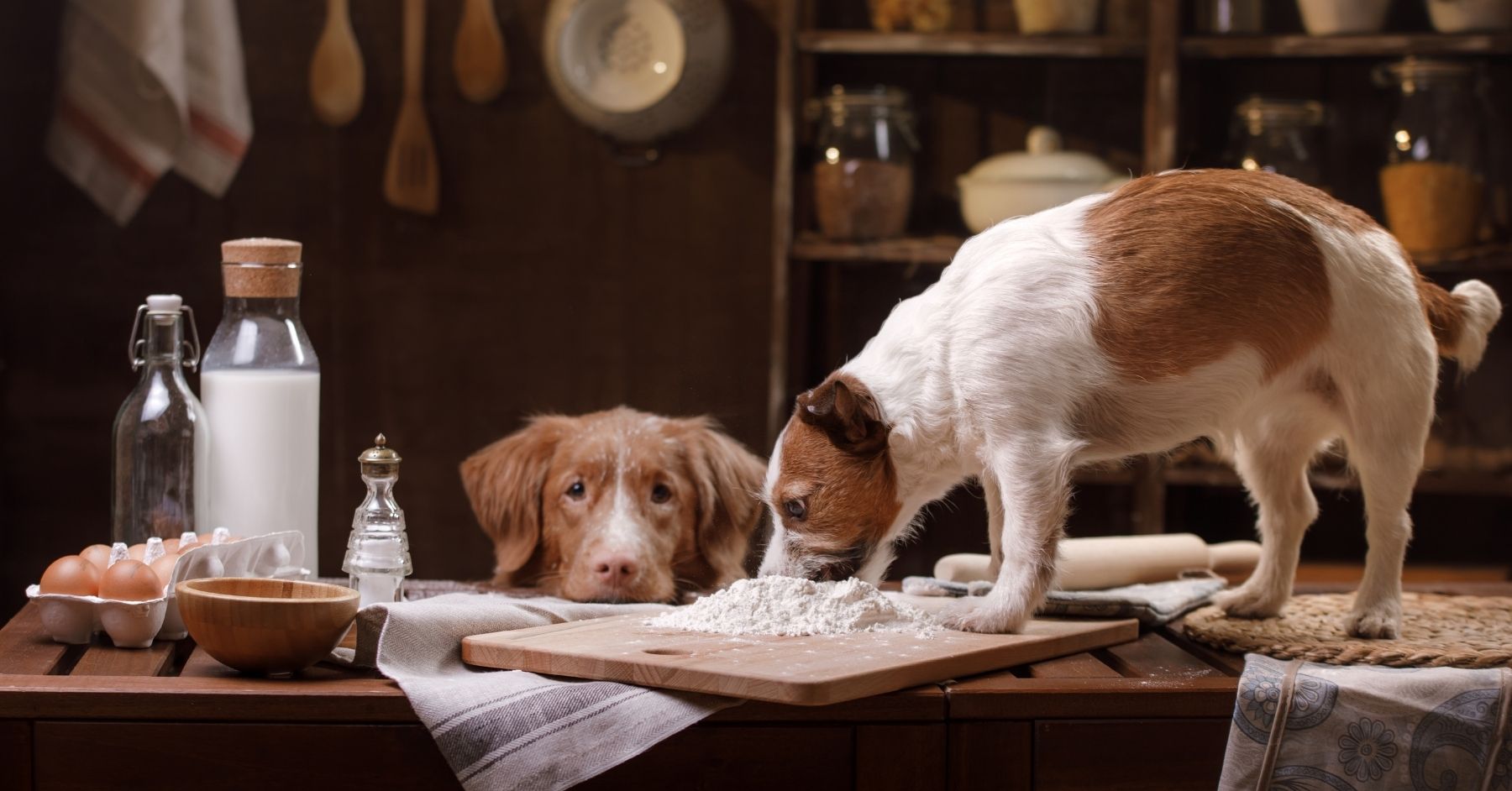
Anyone who has a pet knows that they are adorable and love their owner unconditionally. But sometimes they like to get up to mischief, they shed their fur, and if left on their own, they’ll sniff out and gobble up any food that might have been left in the wrong place in the blink of an eye. But we’ve accepted this as part of the deal, and it’s still worth it. But what should our kitchen be like to suit both them and us?
Materials that are easy to clean
If we have a pet, we need to be prepared to do this a little more often we need to clean, when selecting materials, we prioritise surfaces that are easy to clean.
This is particularly true of cats: they love jumping up onto tables and kitchen worktops, and they might even climb onto the shelves. Let’s not kid ourselves: even if we train them not to do so, the moment we step outside the flat, the rules go out the window. Cat claws certainly can leave their mark on the on a worksheet, provided we have chosen the right ones. Always consult a kitchen design expert and choose the scratch-resistant options they recommend.
Let’s forget about the high-gloss surfaces, because nose marks show up on them in an instant, and it’s quite likely that our little pet will love pottering about and sniffing around amongst the kitchen cupboards.
Let’s choose easy-to-clean, waterproof laminate flooring or tiles, because we’ll certainly have to mop the floor quite often, and puppy dogs in particular might delight us with the odd wee spot or two until they’ve learnt to be house-trained.
Either we should forget about the rug altogether, or it should be the sort we can simply pop in the washing machine – one we don’t mind having to wash, say, once a week, even if it means it wears out quickly.

Let’s choose the darker shades
Dirt shows up more on light colours, and no matter how hard we try, we can’t spend the whole day cleaning. Darker colours don’t necessarily have to be gloomy either, as there are countless styles and shades to choose from. However, bear in mind that dark colours can make smaller spaces feel cramped. If you want to avoid this, choose two-tone kitchen units, where we recommend a darker colour for the lower kitchen units and a lighter colour for the upper kitchen units.
We get on best with closed containers
Cats can easily climb onto shelves too, so don’t leave food on the kitchen worktop or on shelves. Dogs are prone to „messing things up” – they love to rummage around, steal food, or simply make a mess. Therefore, in places accessible to them, you should definitely locked cupboards, choose suitable storage solutions. We should also make sure that cupboard doors do not open easily, as with persistent effort over time, they can learn to open them, meaning that the items stored there will not really be safe. If we’re lucky enough to have a very clever dog, we can also install various child-proof locking mechanisms.
Let them have their place in the kitchen
Most people who don’t live in a cottage feed their pets in the kitchen. Make sure their bowl has a fixed spot, and be sure not to move their water bowl to another location, as it’s important that they can always find it when they’re thirsty. Choose a spot where it won’t bother you, isn’t in the way, and where you won’t accidentally kick it over several times a day, splashing the water everywhere.

Living with a pet requires mutual adaptation, but if we plan our kitchen well, these become compromises that are easy to accept.
If you’d like bespoke kitchen furniture, please feel free to contact Mobilan’s staff, who will design and create the kitchen furniture of your dreams. We take every aspect into account and make the most of your available budget.