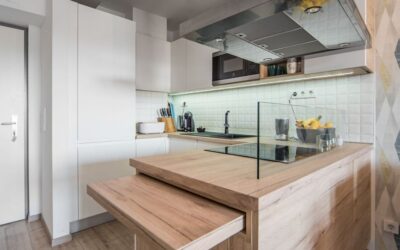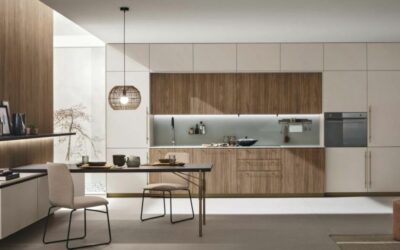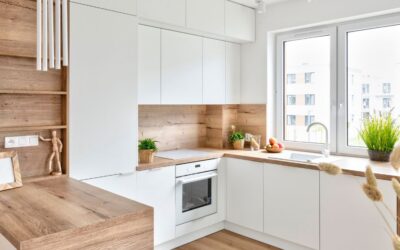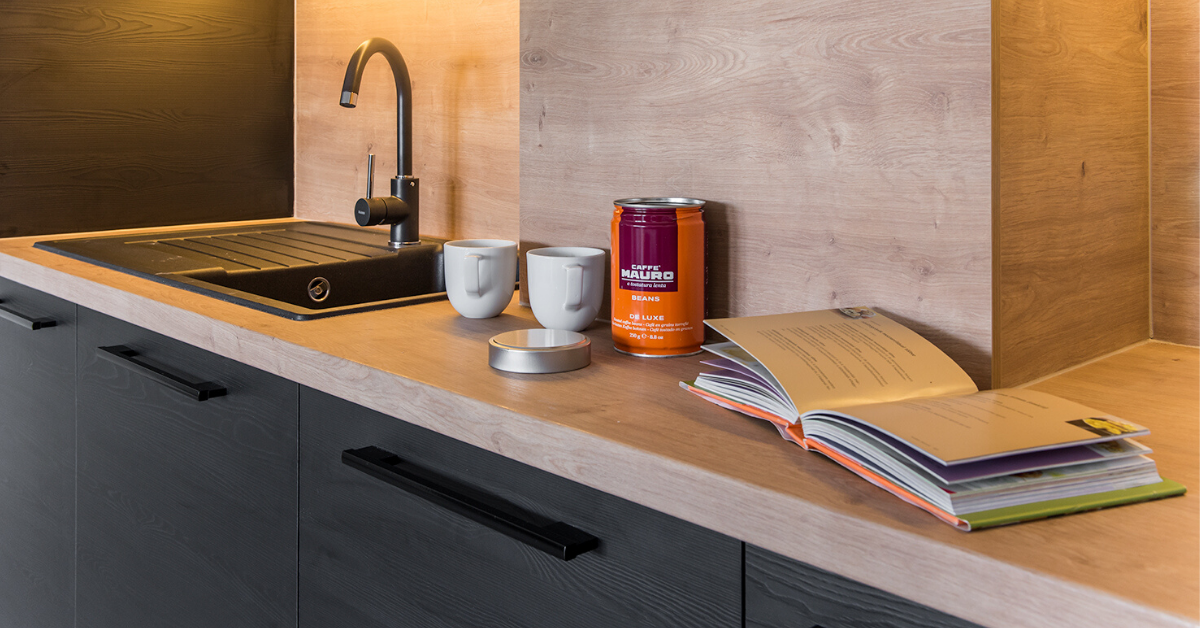
The worktop plays a major role in setting the overall tone of our kitchen, so it’s no wonder that this issue quickly comes to the fore when planning a kitchen. It’s worth paying particular attention to this, not just for aesthetic reasons but for other considerations as well. Ideally, we choose a kitchen to last for the long term, so as well as the design, it’s also extremely important that it serves us well for many years to come.
These days, there is an astonishingly wide range of options available when we’re looking at kitchen worktops. Materials in different colours and patterns lend our kitchens different styles, and they also offer us various advantages and disadvantages. The only thing that can limit the realisation of our dreams is the size of our budget.
The material used for the worktop has a huge impact on the total price of the kitchen units. Nevertheless, we recommend not skimping on this, as in many cases the price is directly proportional to the quality. So, whilst it’s one thing to like the look of something, it’s also important to consider how much and in what way the surface will be used in day-to-day life. For example, if your little girl loves to splash milk all over the kitchen worktop or smear jam on it every morning, then you definitely shouldn’t choose a white granite worktop. That is to say, you can choose one if you like, but be prepared for a lot of daily cleaning work.
Below, we outline three types of worktop, along with their respective advantages and disadvantages, to help you make your choice. Whichever worktop you choose, be sure to take the following factors into account: water and heat resistance, resistance to spills of food and drink and scratches from cutlery, as well as ease of cleaning and resistance to cleaning products.
#1. Worktops with an HPL decorative finish
One of the most popular and widely used types of worktop. HPL stands for High Pressure Laminate. As the name suggests, it is a laminated surface; its base substrate is natural wood chipboard, the top and front of which are covered with a waterproof decorative layer laminated under high pressure.
Advantages: It offers the look and feel of solid wood, stone and ceramics, but at a much lower cost than the real materials. Thanks to its special edge joints, it offers plenty of scope for creativity when installed. Spilled food and drink do not leave stains on it; it can easily withstand heavy crockery (it does not chip); and it is highly resistant to scratches and knocks. It is easy to clean, hygienic and stain-resistant.
Disadvantages: It’s important to bear in mind that the smoother and glossier the surface, the more fragile this type of worktop is. It has limited heat resistance, so it can only withstand high temperatures for a short time – so don’t leave a hot saucepan on it. Pay close attention to who you buy from, as proper edge finishing and the solutions used at the corners can significantly increase or, conversely, reduce the worktop’s lifespan. If the finish is not of a high standard, even water can cause serious damage. However, this can be avoided by choosing the right specialist – the team at Mobilan are, of course, happy to assist you even if you opt for this model. We provide a 10-year product warranty on our kitchen furniture.
#2. Technical stone – Technistone
Technistone is a high-quality quartz surface that combines natural raw materials (quartz) with modern, state-of-the-art mixing and pressing technology. It essentially consists of pressed slabs, which are subsequently processed into the required product.
Advantages: It is incredibly strong and unbreakable, making it resistant to scratches, contact with knives and substances used during cooking (e.g. vinegar, lemon juice). This environmentally friendly engineered stone, with its uniform hardness, is much more flexible than natural stone. Thanks to the technology used, it is scratch-resistant and resistant to acids, alkalis and heat up to several hundred degrees. It comes in an extremely wide range of colours and textures.
Disadvantages: It is difficult to list any real drawbacks. Working with it is particularly demanding in terms of technology, expertise and time, but it has a number of fantastic properties, so if we can find the right specialist, we will be satisfied with it in the long term.

#3. Natural stones
Natural stones include mined materials of organic origin, such as granite or marble.
Advantages: They are simply practical, extremely hard-wearing, and, what’s more, elegant and beautiful. They are water- and heat-resistant, though their durability depends largely on the type of stone. For example, granite worktops are incredibly hard-wearing thanks to their hardness, whilst marble is a softer stone. They are available in a range of colours and patterns; thanks to their natural origin, every piece is unique, as no two stones have exactly the same veining or colour pattern.
Disadvantages: They require regular maintenance, so they are recommended for those who are willing to devote some time to them at regular intervals. With marble, for example, the limescale removers found in cleaning products can cause problems by dulling its shine, so it really does matter what you use and how you clean it. They aren’t the cheapest options, but they’re incredibly durable, so you’re bound to be satisfied with them in the long run.

Whichever worktop we choose, it is important to be sure to ask our kitchen furniture expert what kind of daily or weekly maintenance it requires, so that we can enjoy our choice for many years to come.