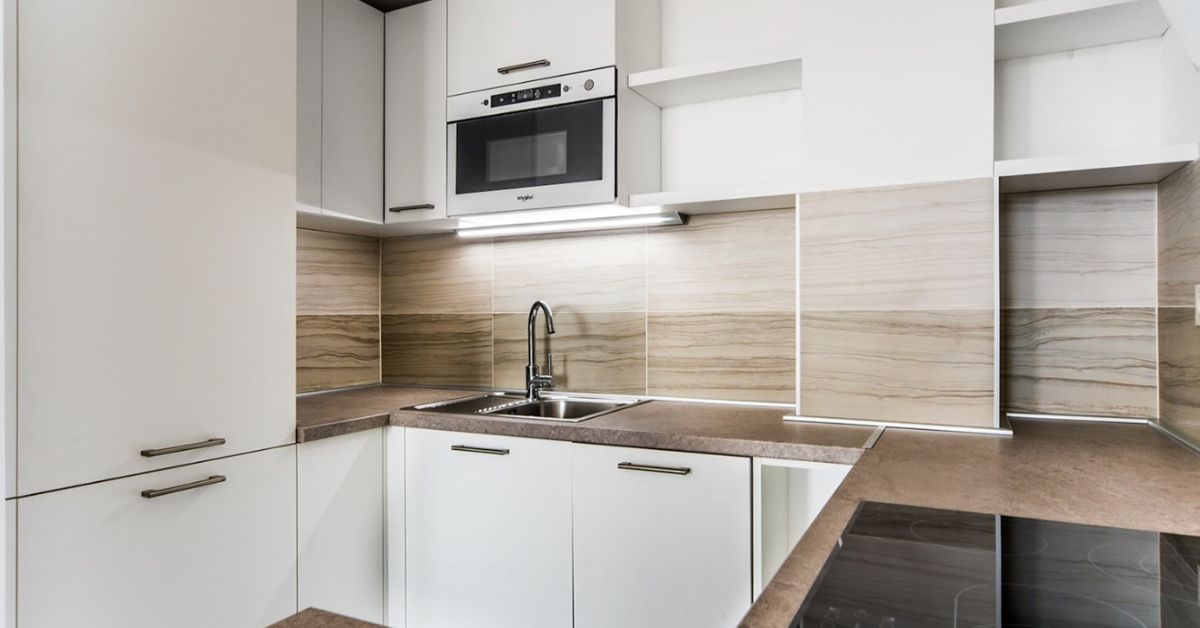
Choosing a kitchen splashback is just as important a decision as designing the kitchen units themselves. There are both functional and design considerations that are worth bearing in mind. We’ve put together a list of some of the questions you ask us most often.
What material should the kitchen splashback be made of?
With so much choice available, it’s not always easy to decide. Be sure to seek the advice of your kitchen designer, as they’ve probably been involved in designing countless kitchens and may highlight aspects you hadn’t even considered. If you like a particular material, be sure to ask how it should be cleaned, as this is the part of the kitchen that is bound to get dirty every single time you cook. It’s important that it’s easy to keep clean and that any splashes won’t damage the material. Have you ever tried removing stew sauce from white grout, for example? Don’t even think about trying it!
Is it really not advisable to choose a tiled splashback?
Nowadays, there is a huge range of beautiful tiles to choose from, although simple metro tiles are also very much in vogue. It is no coincidence that this type of splashback has been used for so long, as it is very durable and, should any damage occur, the affected area can be easily replaced. However, it’s important to bear in mind that the grouting means they aren’t the easiest to keep clean. Incidentally, there are now more modern alternatives, such as so-called ‘tile-replacement’ splashbacks, which can achieve exactly the same effect as original tiles but are much easier to work with and clean.

Which of the stone back panels do we recommend?
Of all natural stones, quartz backsplashes are the easiest to maintain. They are highly resistant to damage; in fact, they are virtually scratch-proof. It is far less fragile than marble and does not require the same level of maintenance as granite. Did you know that granite splashbacks and worktops require annual treatment? As it is a porous stone, we need to seal the pores using a sealant.
I’m looking for a cheap, durable and attractive solution. Is there such a thing?
HPL decorative back panels are based on natural wood-based chipboard, which is covered with a waterproof decorative layer laminated under high pressure. The premium versions are stunning, capable of replicating the look of solid wood, stone and ceramics, yet at a much more affordable price. Daily cleaning is simple too; it is one of the easiest surfaces to clean, and what’s more, it is a scratch-resistant, durable, high-quality material. We are delighted to recommend it for the kitchens we design; you certainly won’t be disappointed with this material.

I’m thinking of using 3D panels – are there any drawbacks?
3D panels really are beautiful; it’s no coincidence that many people choose them not only for their kitchens, but also for their bedrooms and bathrooms. They allow us to achieve a modern, exclusive look, but there is a downside. Unfortunately, their wonderful design is offset by the fact that they are much more fragile than traditional splashbacks, and they are often more difficult to clean.
Did you find our article useful? It’s worth having a look at the Mobilan Magazine among her other articles; for further inspiration, follow her Our Facebook page. If you’d like bespoke kitchen furniture, our staff will be happy to assist you via our contact details.