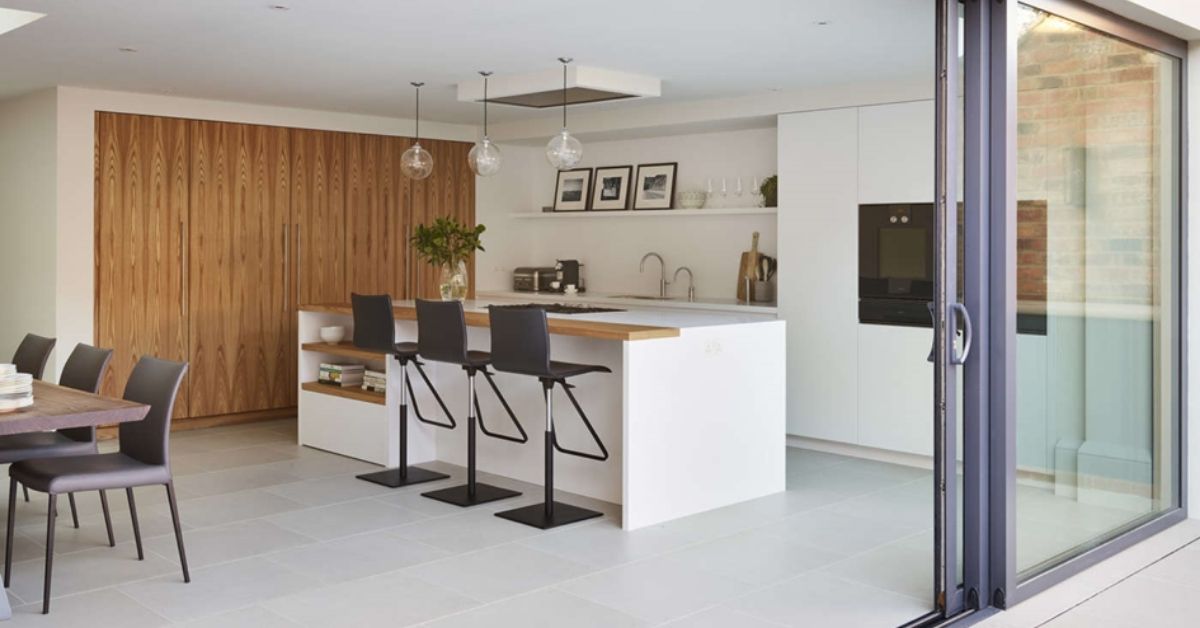
In many cases, there isn’t enough natural light in the kitchen, so planning the right lighting is crucial. In this article, we’d like to use some examples to highlight a few golden rules that are worth following when you start brainstorming ideas.
Where should most of the light go?
It seems fairly straightforward: the lights should be positioned where we need them most. Make sure there is sufficient light above the preparation, cooking and washing-up areas. These industrial-style lights are simple yet stylish and look great above a kitchen island that serves multiple functions.

Classic elements in a modern form
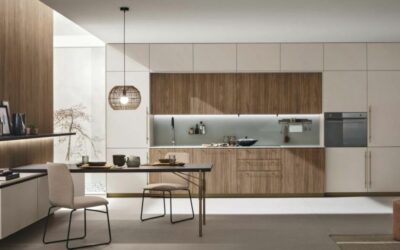
These light fittings are sure to catch the eye! The chandelier suspended above the kitchen island creates a lovely atmosphere in the room. It’s fitted with a dimmer switch so that it can be used not only for practical purposes but also as mood lighting. After all, for a romantic glass of wine, there’s no need for the kitchen to be bathed in full light. Above the sink, brass pendant lights matching the chandelier have been installed, which also harmonise with the handles of the classic, brushed kitchen units and the tap. When positioning the chandeliers and pendant lights, it’s essential to ensure they’re at the right height so that nobody bangs their head. When using several lights together, it is also worth considering the distance between them to ensure there are no shadowed areas in key locations.

Directional spotlights
Spotlights are becoming increasingly popular in kitchens, and this is no coincidence. With the rise of LEDs, the technology has advanced enormously in recent years, making them a truly environmentally friendly solution. They work well both as functional lighting and for creating ambience.

Make the most of the benefits of cupboard lighting!
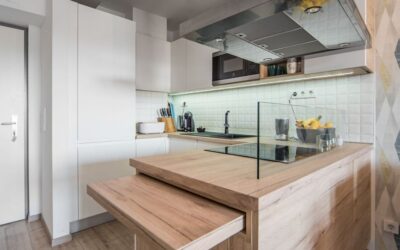
If there is no natural light source – that is, a window – built-in cupboard lighting can be very useful. It can be used to illuminate the worktop, where the extra light can come in handy – for example, when chopping – but it can also be used as decorative lighting.

Wall lights haven’t gone out of fashion either
It’s a good idea to position them above the hob and worktop, so that the light is directed precisely where it’s most needed.

Modern glamour
This lamp doesn’t just provide light; its surface even reflects natural light beautifully. These large, gold pendants really sparkle, bathing your kitchen in a warm, cosy glow. You can even turn the more eye-catching pieces into the focal point of your kitchen by hanging them above a kitchen island or the dining table.

Choose glossy surfaces!
If you want to make the most of both natural and artificial light, it’s best to choose cabinet fronts and worktops with a glossy finish. This is because they reflect light, making the room appear brighter, visually larger and more airy.